

Gate Research: Anthropic Eyes $1.5 Trillion Valuation, Gate Direct IPO Access Helps Investors Capture AI Investment Opportunities

Summary
• Anthropic plans to list on Nasdaq under the ticker ANT, with the final IPO price raised from the previous $70–78 range to $83, implying a fully diluted valuation of approximately $1.5 trillion. Tech giants including Google, NVIDIA, and Microsoft intend to participate in a $26 billion concurrent private placement.
• Anthropic's core business centers on enterprise-grade AI services and usage-based billing, with usage-based revenue reaching $26.3 billion in the first nine months of 2026. Customers contributing more than $100,000 in annualized revenue surpassed 11,900, with enterprise AI demand serving as the primary growth driver.
• In the first nine months of 2026, Anthropic's revenue reached $33.242 billion, up 1,206% year-over-year, while compute costs as a share of revenue fell to 57%. Although operating efficiency has improved markedly, substantial long-term compute commitments continue to pose challenges to future profitability and cash flow.
• Based on 2028 revenue forecasts and forward valuation multiples, the current pricing already reflects elevated growth expectations, and future performance delivery will be key to supporting the valuation.
• Gate IPO Access provides eligible users with a channel to participate in Anthropic's IPO using USDT. After listing, short-term traders can focus on price discovery and market liquidity, swing traders should watch for valuation mean-reversion opportunities, while medium- to long-term investors need to track enterprise customer growth, compute costs, profitability, and share lock-up risks.
• Anthropic possesses the scarcity value of a frontier AI model and growth potential in the enterprise market, but high valuation, model competition, and future share lock-ups may exacerbate stock price volatility. In the short term, focus on post-listing price discovery and market liquidity; in the medium to long term, track enterprise customer growth, compute efficiency, and profitability.
Anthropic IPO Overview: An AI Listing Poised to Breach a Trillion-Dollar Valuation
An AI company founded just five years ago, with revenue of less than $5 billion in 2025, is preparing to list on Nasdaq on November 19, 2026, at a valuation of up to $1.5 trillion. While this may sound incredible, Anthropic is indeed turning it into reality.
Anthropic is an American artificial intelligence company founded in 2021 and headquartered in San Francisco, established by former OpenAI researchers. The company focuses on research and development of large language models and generative AI technology, with its core product being the Claude series of AI models, emphasizing model safety, reliability, and enterprise-grade application capabilities.
As the company behind Claude, Anthropic has grown in recent years from an AI safety research-focused startup into a major player in the global enterprise AI market. From Google and NVIDIA to Microsoft, global tech giants are not only partnering with the company on business but also planning to invest tens of billions of dollars concurrently through this listing.
The appeal of this IPO is therefore obvious: for the first time, a frontier AI model is entering public markets at such a massive scale, giving investors the opportunity to directly invest in a tech company whose core business is AI models. However, with a valuation of $1.5 trillion, is Anthropic the next tech giant, or has it already priced in years of future growth? This article analyzes Anthropic's investment value across five dimensions—IPO terms, business model, financial performance, company valuation, and subscription strategy—as well as the opportunities and risks that ordinary investors should watch for.
IPO Valuation of Approximately $1.5 Trillion, Tech Giants Join En Masse
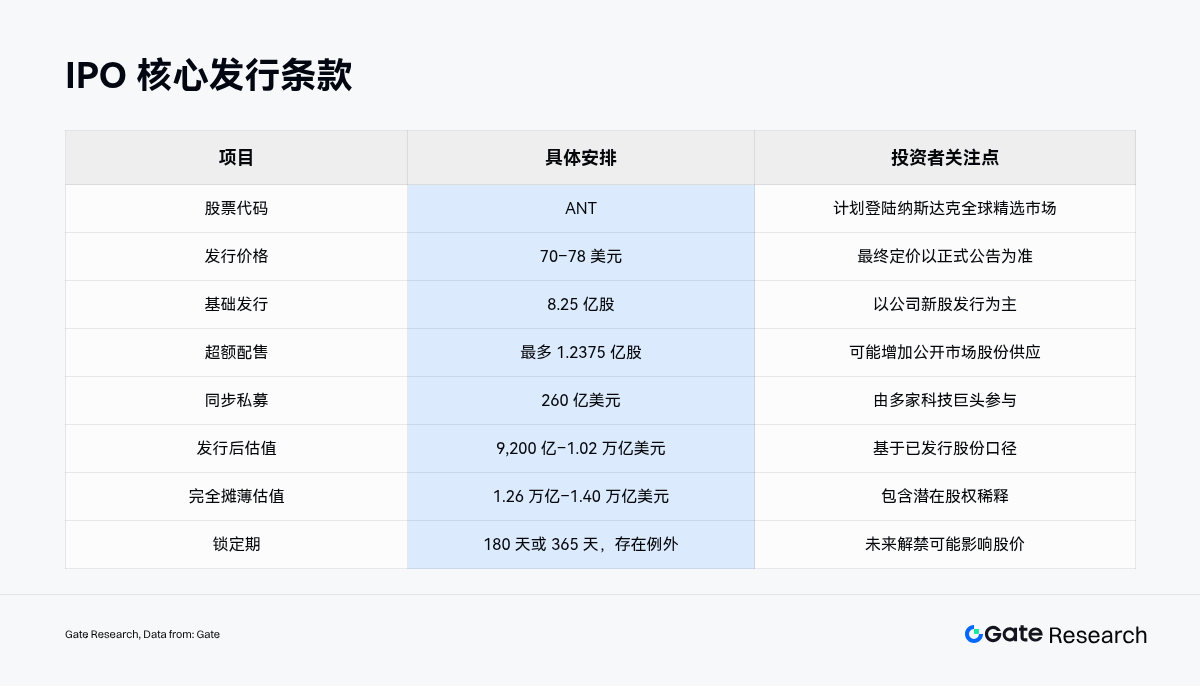
Anthropic plans to list on the Nasdaq Global Select Market under the ticker ANT. The company intends to publicly offer 825 million shares of Class A common stock. As of November 19, the final IPO price has been raised from the previous $70–78 range to $83, implying a fully diluted valuation of approximately $1.5 trillion. Of these, approximately 801 million shares are newly issued by the company, while the remaining approximately 23.65 million shares are being sold by existing shareholders. The underwriters also hold an over-allotment option to purchase approximately 124 million additional shares, which, if fully exercised, would increase the number of publicly offered shares by 15%. This means the IPO not only provides Anthropic with large-scale financing but also creates an opportunity for some early shareholders to realize investment returns.
More notably, Anthropic has also arranged a $26 billion concurrent private placement of Class N shares, with investors including Google, NVIDIA, AMD, Broadcom, Micron, Microsoft, and TSMC Partners. These companies cover nearly every key link in the AI supply chain—from chips and storage to cloud computing and model applications—all of which are closely tied to Anthropic's long-term development. For Anthropic, this investment not only means new funding sources but may also strengthen its partnerships with core compute suppliers and cloud platforms. However, the participation of strategic investors does not guarantee future performance; the commercial value of these partnerships still needs to be validated through actual revenue and profitability.
From $61.5 Billion to a Trillion Dollars: How Fast Has Anthropic's Valuation Grown?
Looking back at its financing history, Anthropic's valuation growth has been equally remarkable. In March 2025, the company completed a $3.5 billion Series E round at a post-money valuation of approximately $61.5 billion. Just half a year later, the Series F round raised the valuation to $183 billion.
Entering 2026, this trend accelerated further. In February, the Series G round of $30 billion corresponded to a valuation of $380 billion; in May, the Series H round reached $65 billion, pushing the company's valuation to $965 billion. Now, less than six months after the Series H round, the upper end of the IPO's fully diluted valuation has risen by approximately another 45%.
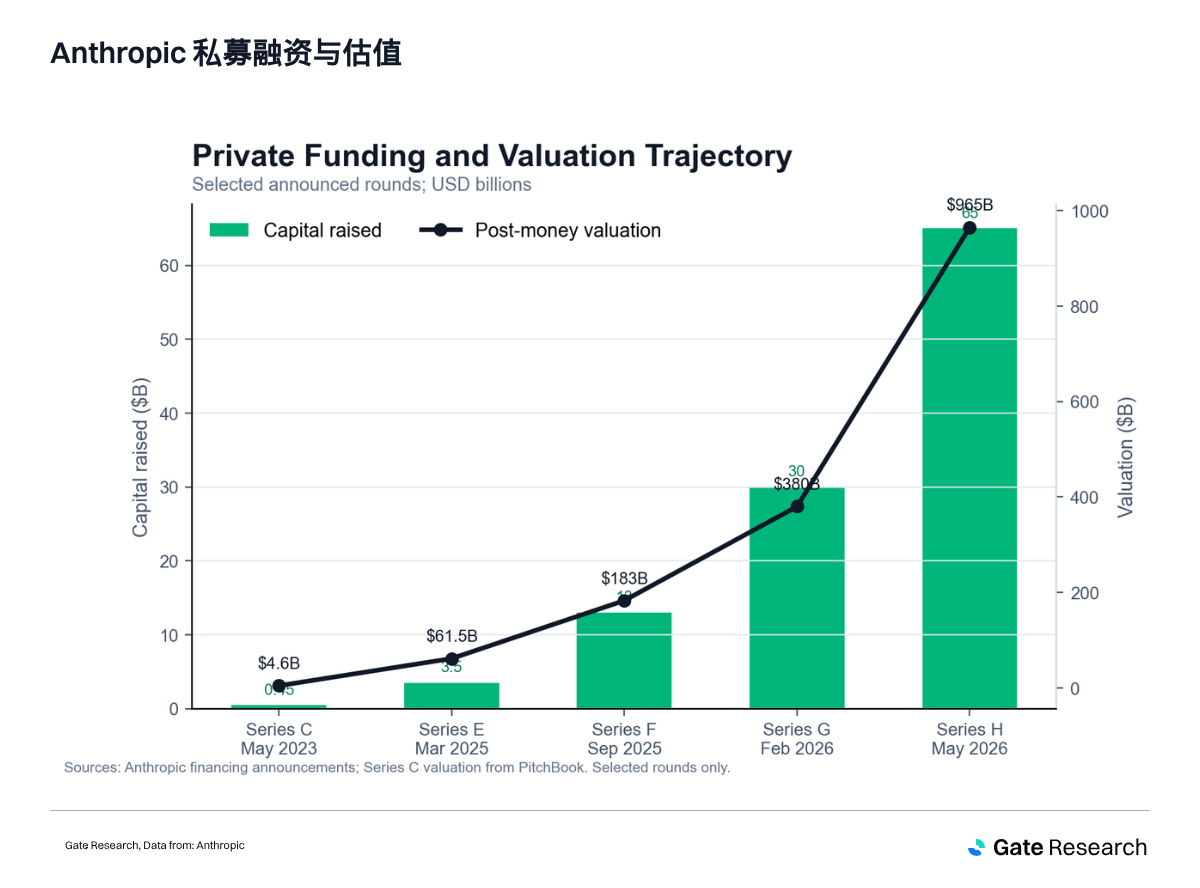
The drivers of this valuation increase are not only capital market enthusiasm for AI but also Claude's commercialization progress. As more enterprises begin using AI for software development, data analysis, and automated workflows, Anthropic's growth expectations no longer rely solely on model performance but are tied to actual enterprise spending. However, consecutive increases in private market valuations do not mean the stock price will follow the same trajectory after listing. IPO investors therefore need to assess how much of past valuation growth has already been reflected in the current offering price.
Market Positioning: Anthropic Doesn't Just Want to Be a Chatbot
Many people know Anthropic through the Claude chatbot, but the company's true goal is to become indispensable AI infrastructure for enterprises and developers in their daily work.
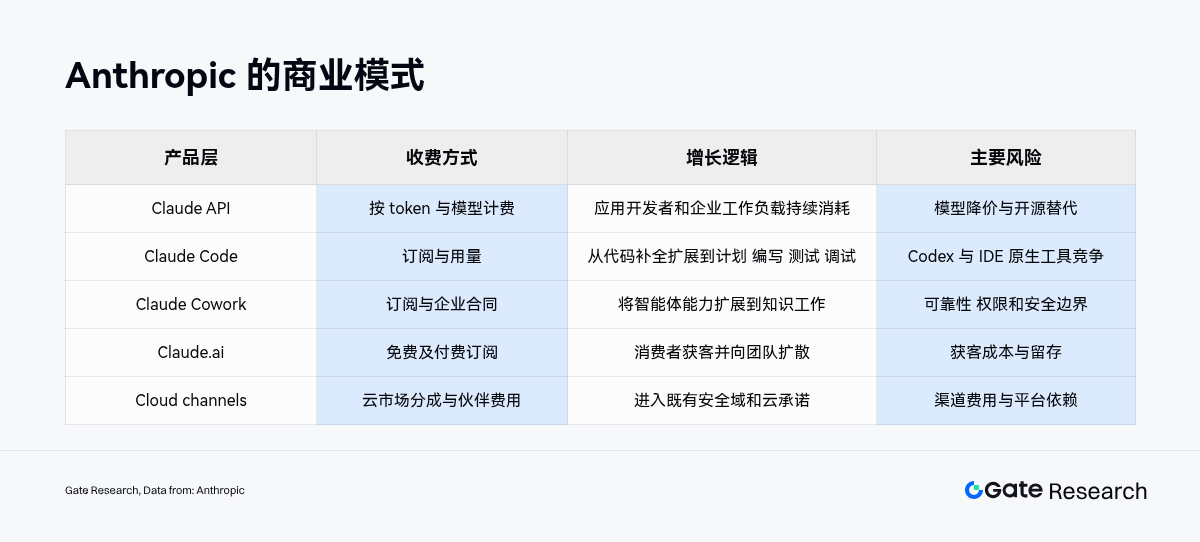
Currently, Anthropic provides services through Claude.ai, Claude Code, Claude Cowork, and developer APIs, while reaching enterprise customers via cloud platforms such as AWS, Google Cloud, and Microsoft Azure. This model differs from chatbot businesses that rely solely on consumer subscriptions. For enterprises, the value of AI lies not just in answering questions but in whether it can actually complete coding, data organization, document processing, and even complex automation tasks. As usage grows, the company has the opportunity to generate more revenue.
But this model also presents potential challenges. For example, large cloud platforms both help Anthropic acquire customers and compute resources while also potentially being competitors. As channel revenue expands, partner fees may also increase. Therefore, for Anthropic, what needs to be proven is not just how many users Claude has, but whether it can translate model capabilities into sustainable, profitable enterprise services.
Business Model and Competitive Landscape: How Does Claude Turn AI Capabilities into Revenue?
Anthropic's business model can be simply understood as charging based on AI usage while expanding customer coverage through subscription services. For large enterprises, Anthropic also signs annual or multi-year contracts, which may include minimum spending commitments, thereby improving the predictability of future revenue.
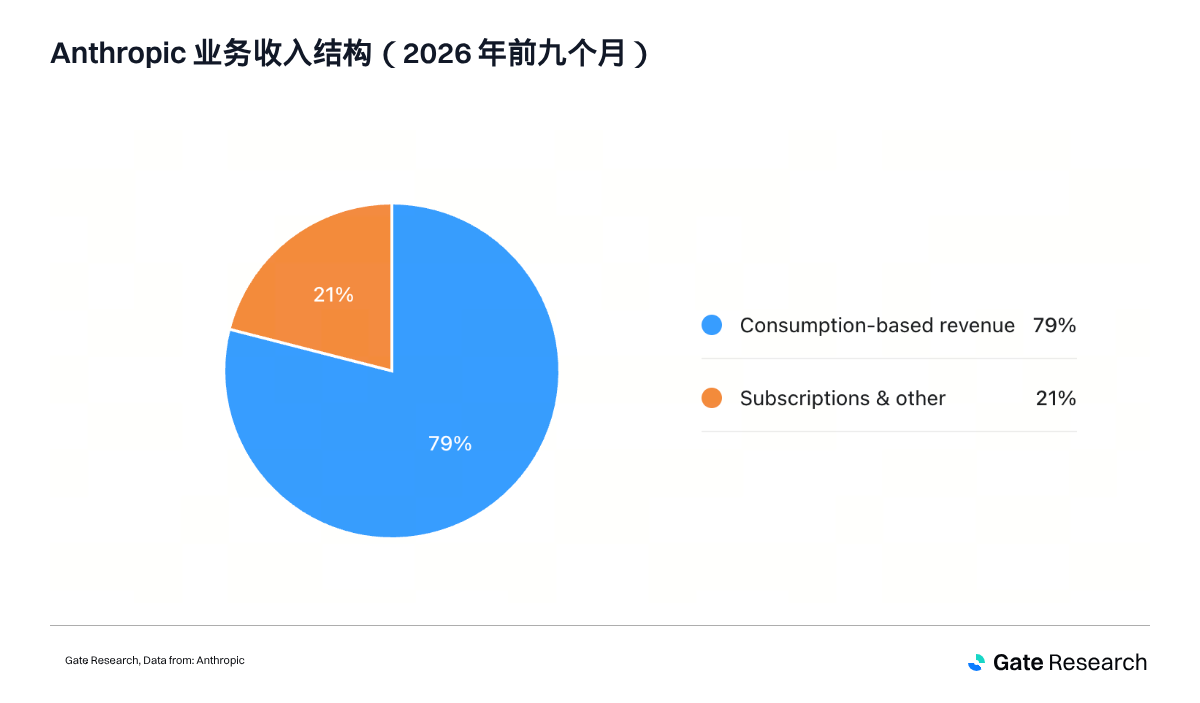
Financial data shows that in 2025, Anthropic's usage-based revenue was approximately $3.8 billion, accounting for 83% of total revenue; subscription revenue was approximately $789 million.
In the first nine months of 2026, usage-based revenue reached $26.3 billion, accounting for approximately 79%; subscription revenue grew to approximately $6.9 billion, with its share rising to 21%. This indicates that usage-based billing remains the company's primary revenue source, while the subscription business is also expanding rapidly.
Unlike traditional software companies, Anthropic's revenue growth depends not only on new customer acquisition but also on whether existing customers expand AI into more business scenarios. For example, an enterprise might initially have only a few dozen engineers using Claude Code. As results are validated, deployment may expand to the entire engineering department and then to customer service, finance, and operations teams. Even if the number of customers remains unchanged, AI usage could grow several-fold. This process of moving from small-scale pilots to enterprise-wide deployment is one of Anthropic's most important current growth drivers.
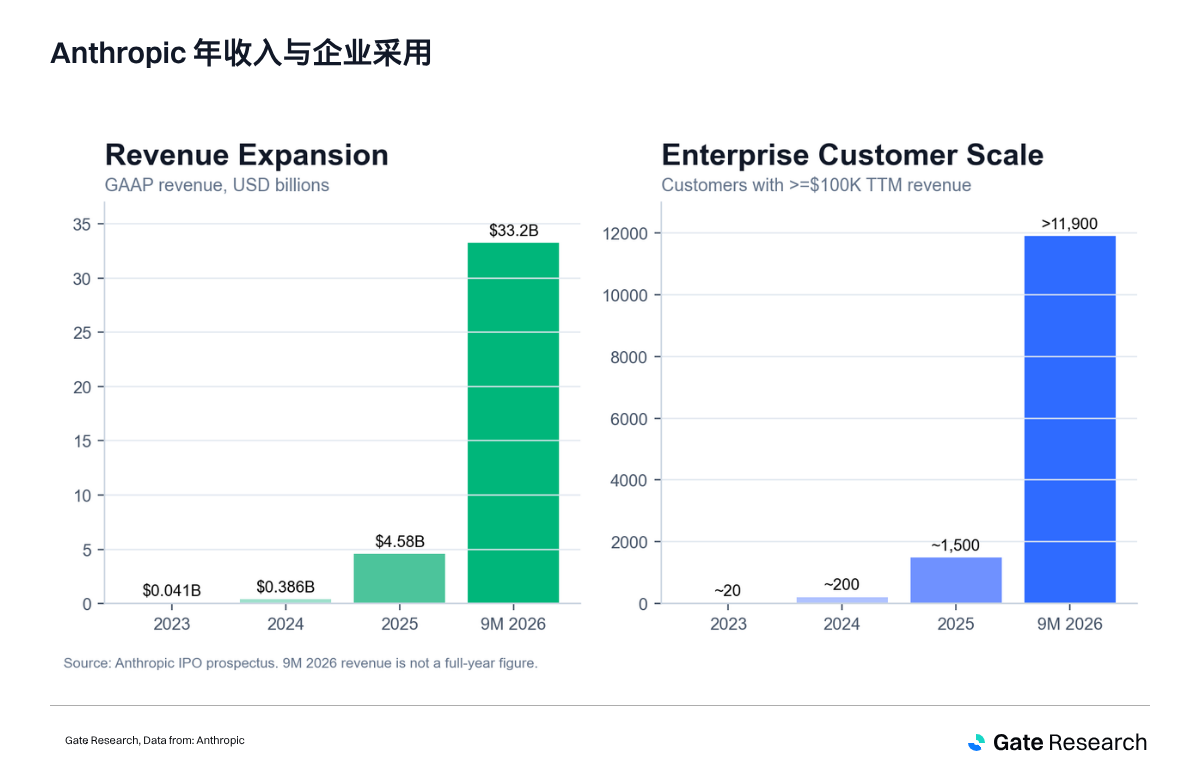
Large Customer Count Grows More Than 11-Fold in a Year, Enterprise Adoption Accelerating
As of the end of September 2026, Anthropic had more than 11,900 customers contributing $100,000 or more in annual revenue, compared with just over 950 a year earlier. More importantly, customers are not only increasing in number but also in spending scale.
The company has more than 1,900 customers contributing over $1 million in annual revenue, of which approximately 250 contribute over $10 million annually. Anthropic also disclosed that more than 50% of Fortune 500 US companies and more than 30% of Forbes Global 2000 companies have reached the threshold of contributing $100,000 in annual revenue. These data reflect that Claude is progressively moving from an experimental tool within enterprises to larger-scale actual business deployment.
Another particularly noteworthy metric is the net revenue retention (NRR) rate of approximately 900%. Net revenue retention measures the revenue change of the same cohort of customers over a period. Assuming a cohort of customers collectively contributed $1 million last year, a 900% NRR means that under the corresponding statistical basis, this cohort now contributes approximately $9 million in revenue.
This does not mean every customer increased spending nine-fold, but it indicates that the usage scale of the existing customer base is expanding rapidly. Many enterprises are just moving from the AI pilot stage to full deployment, and with a low initial usage base, abnormally high growth rates are easy to generate. However, it is worth noting that as the customer base matures, a 900% retention rate is unlikely to be sustained long-term. Therefore, for investors, what matters more is whether the company can still maintain expansion levels significantly above those of the mature software industry even after this rate declines.
Google, OpenAI, Meta: Who Will Become Anthropic's Biggest Competitor?
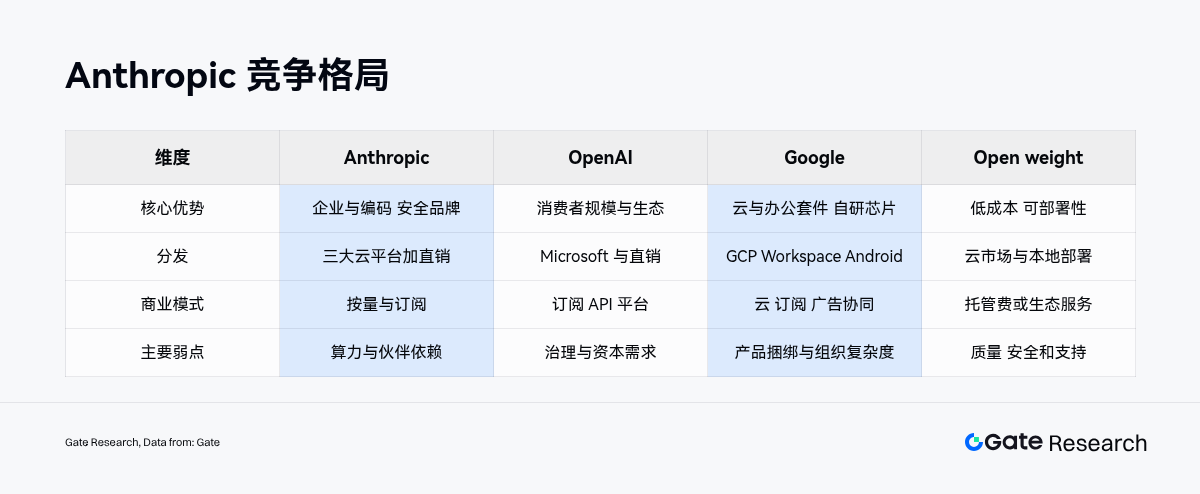
Anthropic's rapid growth does not mean the frontier AI market has settled into a stable landscape. Currently, its most direct competitors include Google and OpenAI.
• Google has its own TPU chips, Google Cloud, search engine, Workspace, and other mature product systems, enabling it to integrate AI capabilities directly into existing enterprise services.
• OpenAI relies on ChatGPT's consumer brand advantage, developer ecosystem, and Microsoft's enterprise channels to maintain an important competitive position in the model services market.
• Meta, xAI, and open-source model providers are also competing through different technological approaches. In particular, the proliferation of open-weight models and low-cost inference services could weaken customers' willingness to pay high premiums for frontier closed-source models.
However, AI model competition is not just about who is smarter on leaderboards. What truly influences enterprise choices is whether models can reliably complete tasks, whether usage costs are reasonable, whether data is secure, and whether they can integrate smoothly with existing software systems. From this perspective, Anthropic has already accumulated certain advantages.
Menlo Ventures conducted a survey in 2026 of nearly 400 US enterprise decision-makers with AI spending exceeding $4 billion. The results showed that Anthropic's estimated share of enterprise LLM API spending rose from 40% the previous year to 55%, while OpenAI held 31% and Google 9%.
Financial Performance and Compute Economics: After Revenue Surges, Is Anthropic Actually Profitable?
Revenue Grows Hundreds of Fold in Three Years, but Growth Rate Begins to Normalize
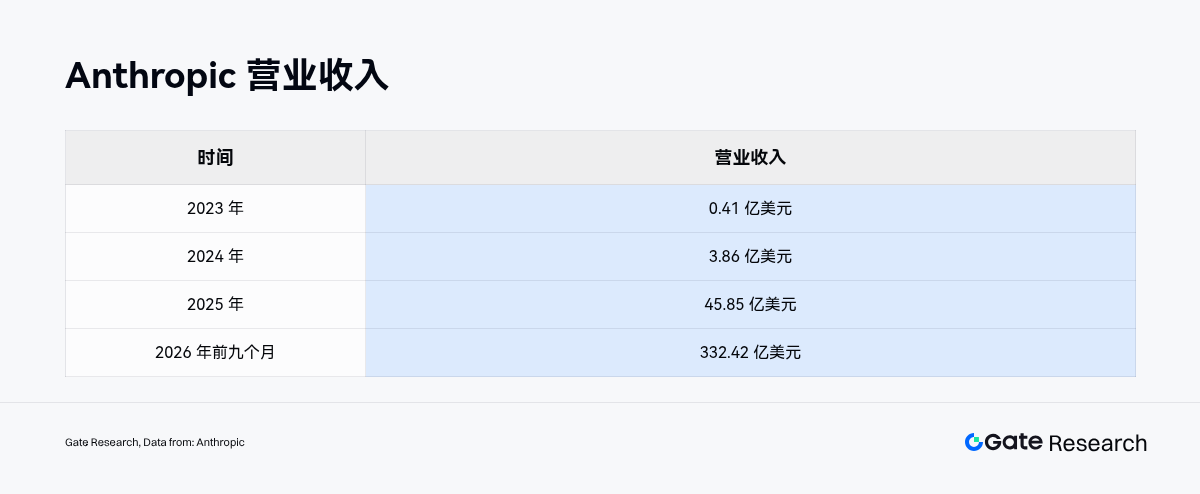
In terms of revenue growth, Anthropic's performance is sufficient to explain why capital markets have given it such an extremely high valuation. In 2023, the company's revenue was only approximately $41 million; in 2024 it grew to $386 million; in 2025 it reached $4.585 billion. By 2026, in just the first three quarters, Anthropic achieved $33.242 billion in revenue, up approximately 1,206% year-over-year. Quarterly data shows a similar trend. In Q1 2025, Anthropic's revenue was approximately $376 million; by Q3 2026, single-quarter revenue had reached $16.956 billion.
However, the growth rate is changing. Q2 2026 revenue grew approximately 144% quarter-over-quarter, while Q3 quarter-over-quarter growth slowed to 47%. This does not mean the business is beginning to decline but rather that as the revenue base expands rapidly, maintaining the previous ultra-high growth rate is becoming increasingly difficult.
Objectively speaking, it will be difficult for Anthropic to achieve another ten-fold increase going forward, but for investors, what can be observed is whether Anthropic can continue to maintain high-speed growth and improve profit margins as its revenue scale continues to expand.
Net Loss Exceeds $100 Billion: Did the Company Really Burn That Much Cash?
There is one easily misunderstood figure in Anthropic's financial statements. In the first nine months of 2026, the company's net loss calculated under US Generally Accepted Accounting Principles (GAAP) reached approximately $104 billion.
At first glance, this seems to imply that Anthropic has consumed over $100 billion in funding to develop its AI business. But in reality, this loss includes a large amount of non-cash accounting adjustments. Of this, approximately $94.3 billion comes from fair value changes in financial instruments such as convertible bonds, derivative liabilities, and SAFEs, while another approximately $10.3 billion is related to fair value changes in partner financing arrangements.
Simply put, as Anthropic's valuation rises, some financial instruments that can be converted into equity in the future also become more valuable. Under accounting rules, the company must recognize the increase in the value of related liabilities as a loss. Although these losses affect net income, they do not mean the company actually paid out the same amount of cash in the period.
After the IPO is completed and the related instruments are converted, some of the accounting liabilities may convert into shareholders' equity, manifesting more as share dilution rather than equivalent ongoing cash outflows.
Compute Is the Biggest Cost: Does Higher AI Usage Necessarily Mean Higher Profit?
The biggest difference between Anthropic's business model and traditional software companies is that AI services require continuous consumption of substantial compute resources. Once ordinary software is developed, the marginal service cost for additional users tends to be low. But every time an AI model processes a complex task, computing resources are required. In addition, the company must continuously train new models, purchase chips, rent data centers, and prepare computing capacity in advance for potential future demand. Therefore, compute costs determine whether Anthropic's high growth can truly translate into high profits.
In 2025, Anthropic's compute and infrastructure costs were approximately $7.326 billion, equivalent to 160% of that year's revenue. By the first nine months of 2026, although this cost had increased to approximately $18.808 billion, its share of revenue had fallen to approximately 57%. This means the company's revenue generation was at one point significantly outpacing the growth of compute costs.
Using a more intuitive metric: in Q1 2025, for every $1 of total compute costs Anthropic invested, it generated only about $0.40 in revenue; by Q2 2026, this figure had risen to approximately $2.08. However, in Q3, due to the concentrated delivery of approximately $5 billion in short-term high-priced compute, the ratio of revenue to total compute costs fell back to 1.72x.
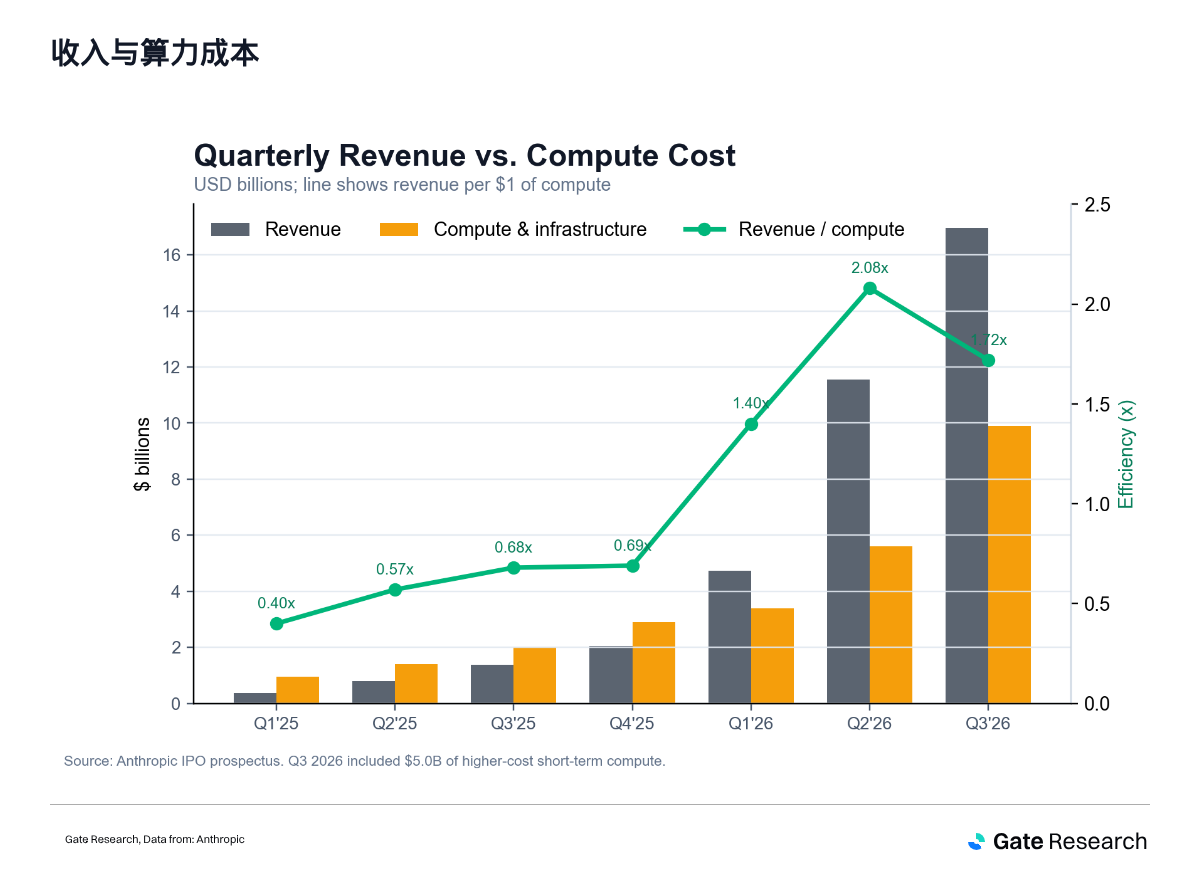
It should be noted that the ratio of revenue to total compute costs does not equal gross margin, because Anthropic's compute resources are used simultaneously for model training, inference services, product development, and internal use. But this metric still has important reference value because it helps investors judge whether the company is using computing resources more efficiently. If compute costs as a share of revenue can steadily decline in the future, Anthropic's profitability potential will likely expand; conversely, if new model R&D and compute procurement consistently outpace revenue growth, the high valuation could face greater pressure.