

Gate Research: Alpenglow Reshapes Solana — Can Higher Performance Deliver Stronger Value Capture?

Summary
• On October 21, 2026, Solana activated Alpenglow on mainnet. This is the first complete replacement of its consensus mechanism since Solana launched.
• After the upgrade, transaction finality time was reduced from approximately 12.8 seconds to a target of 150 milliseconds; recent observations on the mainnet dashboard show a value of approximately 196 milliseconds. At the same time, validator voting moved from on-chain per-vote submission to off-chain exchange aggregated into certificates, reducing both voting costs and block space consumption.
• From a technical perspective, Alpenglow has already achieved clear results. However, performance improvements primarily enhance user and application experience; only when they further bring real transactions, stablecoin payments, and tokenized assets, and generate fees, burns, and staking demand, will they translate into sustainable value for SOL.
• Alpenglow significantly improves Solana's ability to compete in real-time financial infrastructure, but at this stage it is more about expanding Solana's addressable market rather than having already delivered revenue growth.
• Over the next two quarters, non-vote transactions, stablecoin activity, real-world assets, network revenue, and validator composition will be more indicative of whether this upgrade is truly successful than TPS alone.
1. Introduction
In the blockchain industry, we often use TPS (Transactions Per Second), block times, and transaction fees to comprehensively evaluate a public chain. But in practice, a public chain's product capability and its commercial value cannot be conflated. For example, expanding an airport runway can increase flight capacity, but without more passengers and routes, revenue will not automatically increase. The same applies to blockchains: higher throughput only means it can handle more business, not that this capacity will necessarily be used by real demand, and certainly not that it will directly translate into higher protocol revenue and token value.
Therefore, to assess the significance of Alpenglow, we cannot just look at "how much faster Solana has become." We also need to answer three more critical questions: First, did this upgrade truly solve the core bottlenecks that previously constrained Solana? Second, can faster finality translate into new application scenarios and financial activity? Third, can the resulting economic value effectively flow through to SOL, rather than being primarily captured by trading applications, market makers, and users?
To answer these questions, we need to first return to Solana before Alpenglow, understand why the original consensus mechanism was able to support its early rapid growth, and why it gradually struggled to meet Solana's next-stage development goals as network scale and application demands changed.
2. Before the Upgrade: Why Did Solana's Old Consensus Mechanism Reach Its Limits?
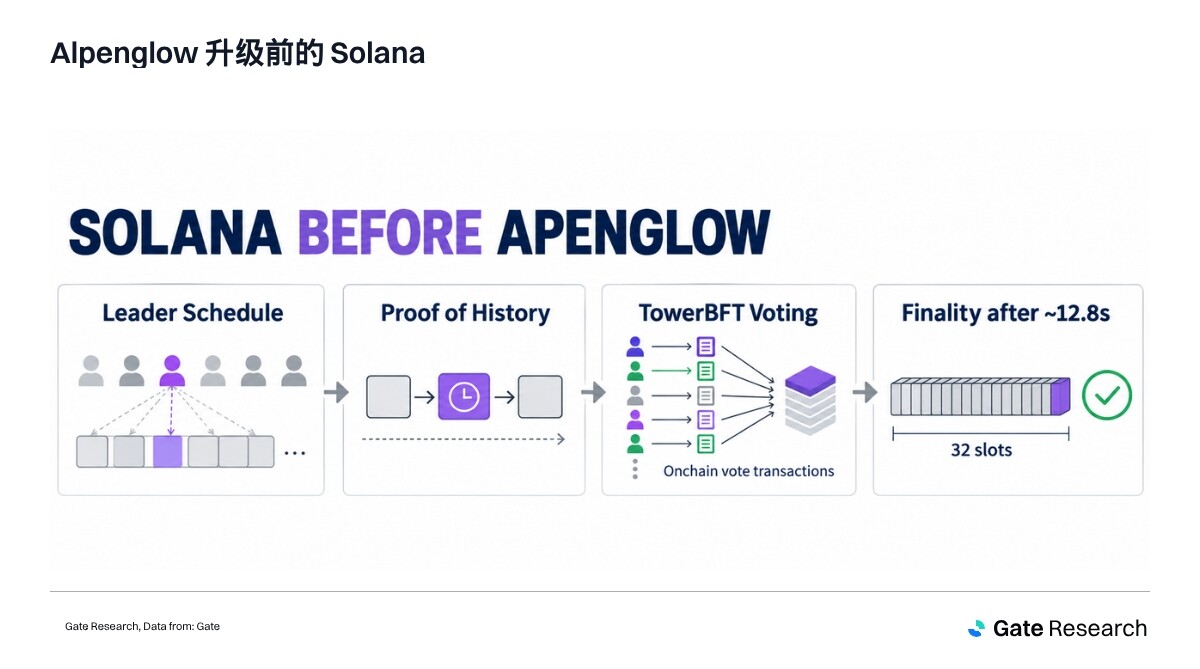
Before the upgrade, Solana's core mechanism was typically summarized as Proof of History and TowerBFT. However, Proof of History is not a standalone consensus algorithm responsible for "how everyone reaches agreement"; it is more like a cryptographic clock that the entire network references. What actually handles validator voting and block confirmation is TowerBFT. Together, they helped Solana establish its early characteristics of high throughput, low fees, and fast pre-confirmation.
2.1 Proof of History and TowerBFT: The Foundation of Solana's High-Performance Architecture
Solana schedules validators in advance to take turns serving as block leaders. Within their own time windows, leaders receive user transactions, determine ordering, execute transactions, and propose blocks. Proof of History, meanwhile, uses continuous, non-skippable hash computations to form a verifiable timeline chain.
But knowing the transaction order does not mean the entire network has accepted the block. After other validators receive the block proposed by the leader, they must check whether the transactions are valid and vote through TowerBFT. Under the old mechanism, these votes were themselves on-chain transactions. As subsequent blocks continue to be produced, validator votes stack layer by layer and enter increasingly longer lockup periods. The more consecutive times a validator supports the same chain, the longer the wait required to renege. A block typically needs to accumulate votes and locks across approximately 32 slots to achieve full finality. Based on the previous target slot time of approximately 400 milliseconds, this process takes about 12.8 seconds.
This design was not backward. When Solana launched in 2020, its first priority was to prove that a single public chain could handle a large volume of transactions without relying on Layer 2. Pre-scheduled leaders reduced the wait for competing for block production rights, Proof of History reduced time coordination costs, and TowerBFT provided a relatively mature voting and lockup framework. Together, they supported Solana's later DEX, NFT, Memecoin, payments, and stablecoin ecosystems.
2.2 From Speed Advantage to Finality Bottleneck: Why the Old Consensus Mechanism Needed an Upgrade
The problem with this mechanism is that a transaction "being seen quickly" and a transaction "being irreversible" are not the same thing. Users may see a transaction succeed in under 1 second, and applications may immediately update balances, but for a transaction to achieve cryptographically complete finality, it still requires waiting approximately 12.8 seconds. For ordinary transfers, this is just a brief wait; for exchange deposits, cross-chain bridges, collateral liquidation, stablecoin payments, and tokenized securities, this period represents real risk. Prices may have already changed, market makers need to hold additional inventory, cross-chain bridges cannot safely release assets on the other chain, and merchants cannot immediately confirm that a payment absolutely will not be reversed.
More importantly, on-chain per-vote submission began to become a cost burden. Every active validator had to submit a vote in nearly every slot, consuming block space, bandwidth, and computational resources, and requiring transaction fees. Solana later gradually reduced slot times from 400 milliseconds to 200 milliseconds, nearly doubling the number of slots per unit time, but voting frequency and costs rose accordingly. Digital asset financial services firm Galaxy Digital, when running Solana validators, estimated that voting costs at 200-millisecond slots once approached 2 SOL per day. Larger validators could more easily absorb this fixed expense, while smaller validators might exit due to excessive costs, potentially exacerbating operator concentration over time.
The old mechanism also had deeper engineering limitations. TowerBFT required validators to continuously propagate votes and maintain historical lockup states, which together with Proof of History, on-chain voting, and Gossip communication formed a relatively complex consensus coordination system. When some validators go offline simultaneously, or when the network experiences congestion or software failures, vote coordination and network recovery under this mechanism also face greater pressure. Alpenglow's original proposal also noted that TowerBFT lacked the complete formal security proofs required by the new design, and suffered from bandwidth consumption, computational overhead, and voting timing incentive issues.
However, this does not mean that all of Solana's historical network outages should be attributed to TowerBFT. Some past failures came from client bugs, abnormal transaction loads, or resource exhaustion, so replacing the consensus mechanism cannot automatically eliminate all downtime risks. What Alpenglow truly aims to address is the finality, communication efficiency, and validator cost issues that gradually emerged from the original consensus design as Solana's performance and application scale continued to grow—not to solve all network stability problems with a single consensus upgrade.
3. What Did Alpenglow Change?
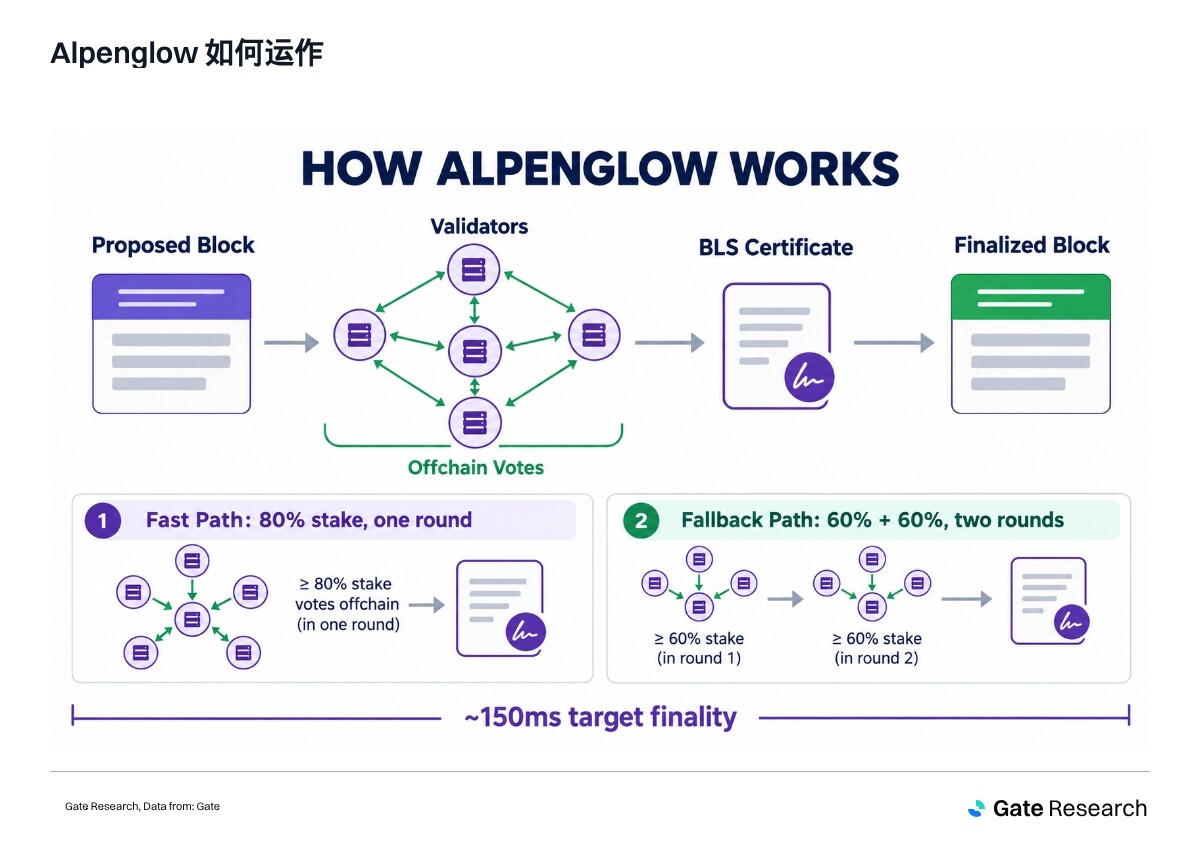
The core of Alpenglow's first phase is Votor. Unlike the old mechanism, validators no longer write every vote into blocks as transactions. Instead, they first exchange votes directly off-chain, then use BLS aggregate signatures to compress a large number of validator signatures into a single certificate that can be verified uniformly. If in the first round of voting, validators supporting a certain block reach 80% of staking weight, that block can directly enter the fast confirmation path; if this threshold is not met, the system completes subsequent confirmation through two 60% thresholds.
The two mechanisms can be understood as two "collective voting" methods. Under the old mechanism, hundreds of validators needed to individually write "I agree" into the public ledger; Alpenglow has everyone complete voting outside the ledger first, then writes the final aggregated "collective signature proof" into the ledger. This way, the voting result can still be verified by everyone, but a large number of individual voting transactions no longer need to occupy block space and network resources.
On October 21, 2026, Alpenglow officially took over Solana mainnet consensus at slot 459,653,000. The genesis certificate was jointly signed by 446 of 654 participating validators, and the handover from the old mechanism to the new one took approximately 900 milliseconds. The official mainnet dashboard recently showed that the actually observed finality time is approximately 196 milliseconds, about 98.5% shorter than the old mechanism's approximately 12.8 seconds. If the design target of 150 milliseconds is further achieved, finality speed would theoretically improve by approximately 85 times.
The changes brought by the upgrade are not only reflected in speed but also in validator costs. Previously, under 200-millisecond slots, the old on-chain voting mechanism could consume approximately 2 SOL per day; Alpenglow instead requires validators to pay a fixed Validator Admission Ticket (VAT) of 0.8 SOL per epoch, which works out to approximately 0.8 SOL per day, and this portion of fees is entirely burned.
Based on a static estimate of 654 validators at the time of switchover, the entire network could reduce gross voting expenditure by approximately 286,000 SOL per year. At a SOL price of approximately $100.79 on October 26, 2026, this corresponds to approximately $28.9 million. Meanwhile, the VAT mechanism is expected to burn approximately 191,000 SOL per year, equivalent to approximately $19.2 million. In other words, Alpenglow on one hand reduces the ongoing voting costs validators must bear to participate in consensus, and on the other hand preserves SOL's economic consumption through a fixed burn mechanism.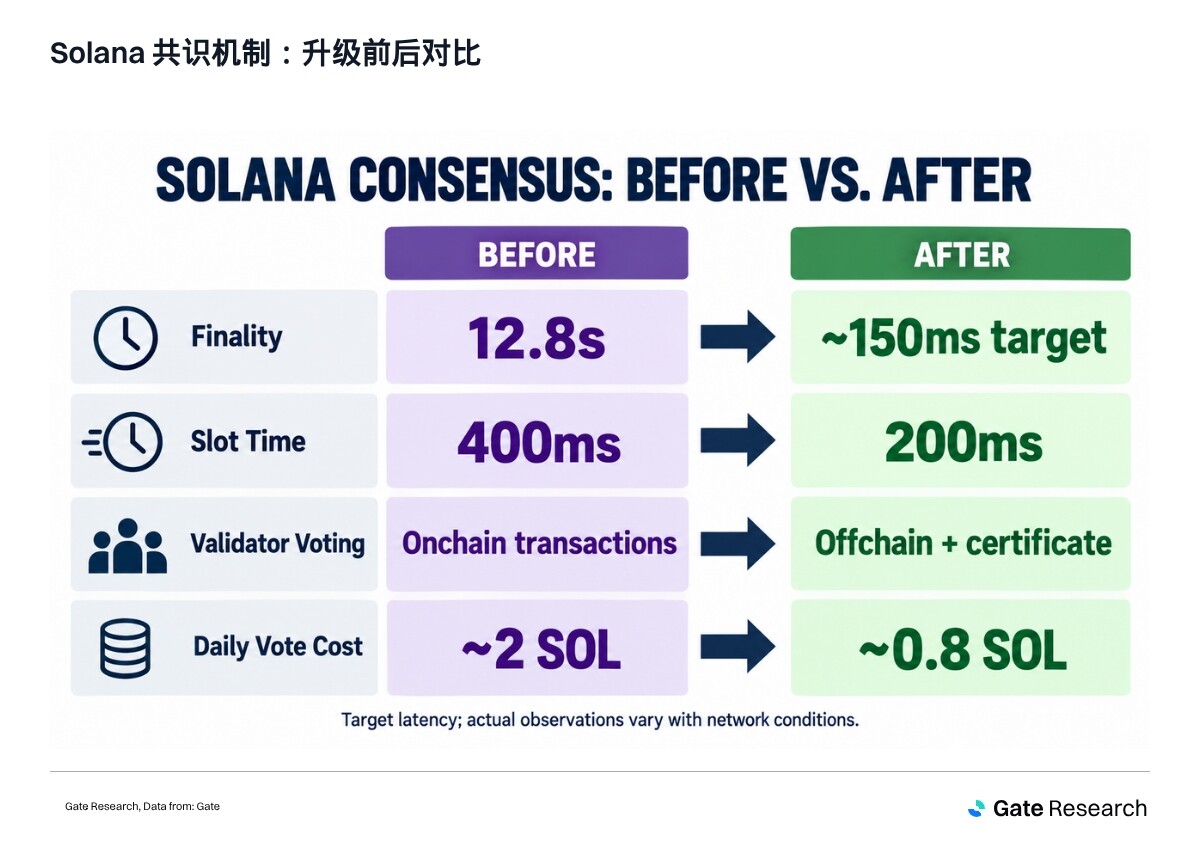
4. How Do Performance Improvements Translate into Economic Value?
Performance improvements themselves do not automatically become economic value. The key is whether they can follow a complete transmission chain to ultimately generate new demand, real revenue, and token value capture.
Alpenglow's economic transmission chain can be summarized as: shorter finality time first reduces settlement risk and capital lockup, then attracts more transactions, payments, and institutional assets on-chain, and only then can business growth potentially translate into fee revenue, SOL burns, and staking demand. The first two steps primarily create value at the user and application level; only the last step truly involves value capture for SOL itself.
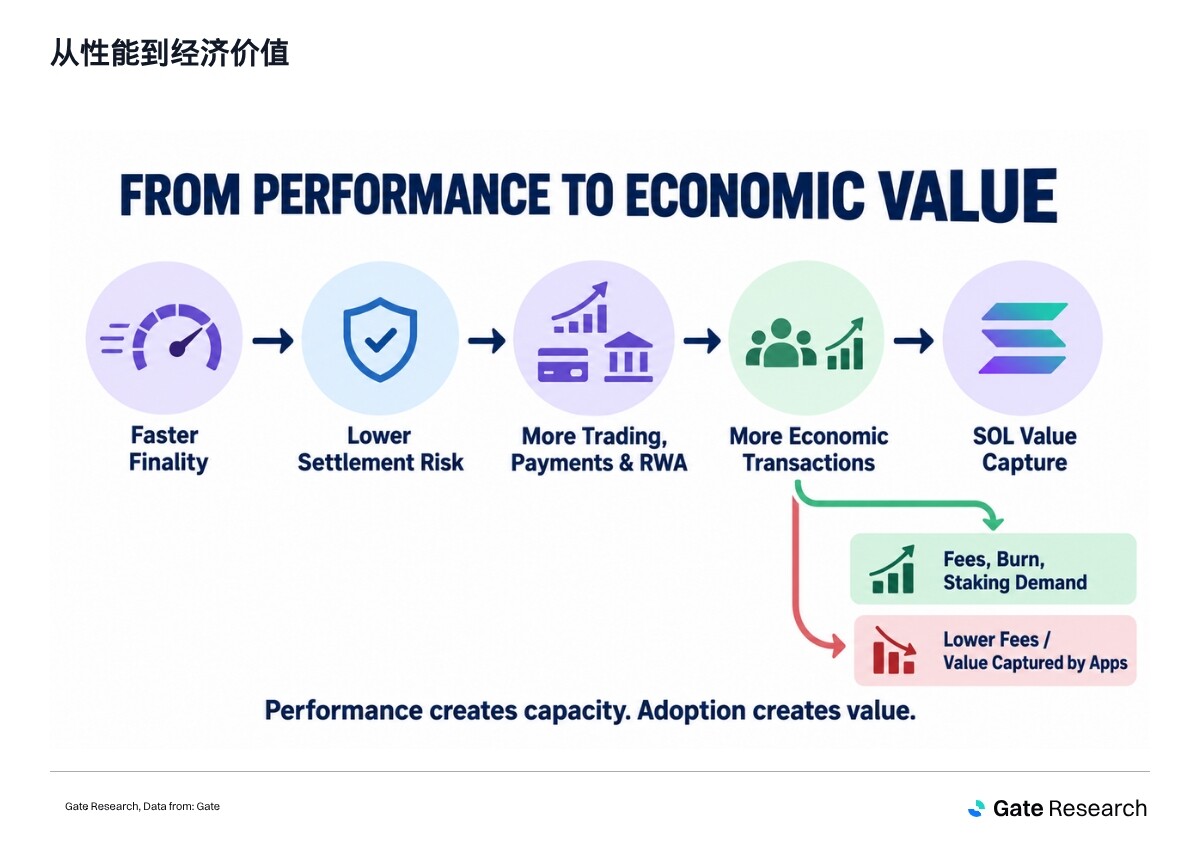
For trading markets, reducing finality from seconds to sub-second levels can reduce the price risk and inventory pressure that market makers bear while transactions are not yet fully confirmed. Exchanges can confirm deposits faster, cross-chain bridges can release target-chain assets earlier, and clearing systems can handle collateral changes more promptly. For high-frequency trading and capital-intensive businesses, this means lower waiting costs and higher capital efficiency. But an approximately 85-fold improvement in confirmation speed does not mean trading volume will also grow 85-fold. Liquidity depth, market-making quality, RPC performance, front-end latency, and regulatory access will still determine the ultimate level of actual adoption.
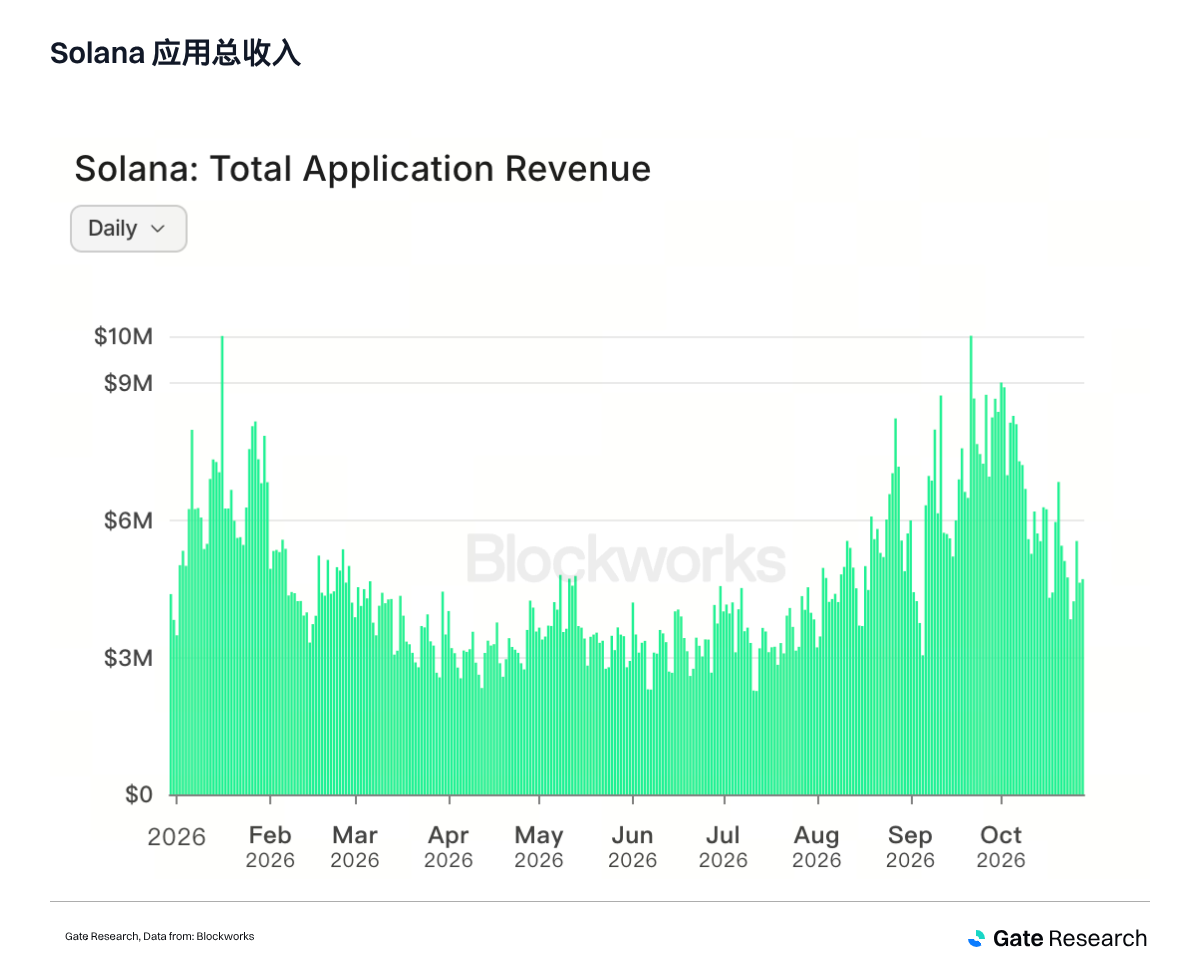
Solana itself already has a strong business foundation. According to Blockworks data, in Q3 2026, Solana spot DEX trading volume was approximately $197.2 billion, up 23% quarter-over-quarter, accounting for approximately 36% of cross-chain DEX trading volume; application revenue during the same period was approximately $299.1 million, up 48% quarter-over-quarter. After the Alpenglow upgrade, it remains necessary to continuously monitor whether trading volume, application revenue, and capital utilization efficiency exceed previous trends.
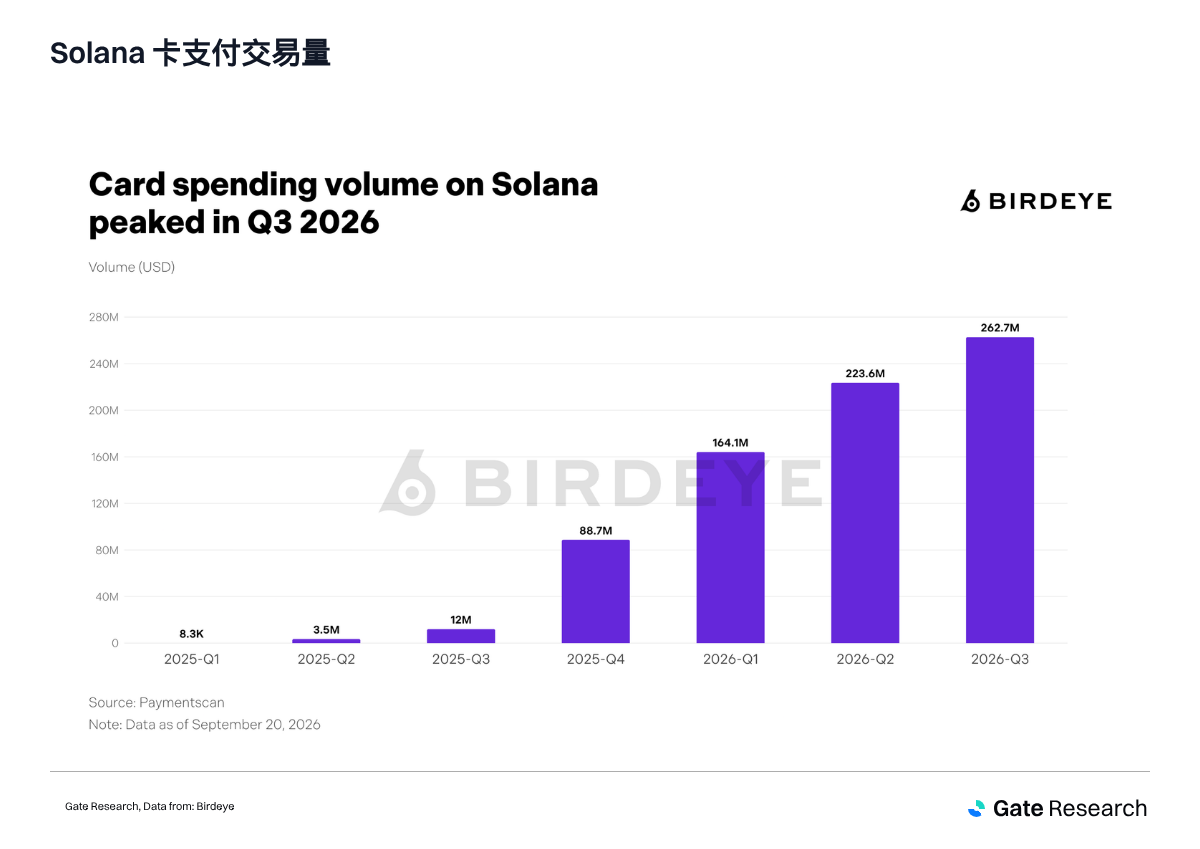
Birdeye statistics show that in Q3 2026, Solana's stablecoin size was approximately $15.65 billion, up 8% quarter-over-quarter; stablecoin-holding wallets numbered approximately 13.07 million, up 16% quarter-over-quarter; on-chain card payment volume during the same period was approximately $262.7 million. Payment business values certainty more than just TPS. For merchants, the truly important question is not how many transactions the network can process per second, but how long it takes for a payment to be confirmed as non-reversible. Sub-second finality helps improve the experience of stablecoin payments, merchant settlement, and machine payments, but whether it truly translates into commercial growth still requires observing whether these metrics can continue to accelerate after the upgrade.
Tokenized assets may be a more direct beneficiary scenario. Securities trading requires not only fast execution but also rapid irreversible transfer of asset ownership. In Q3 2026, RWA size on Solana was approximately $4.49 billion, up 28% quarter-over-quarter; tokenized stock holders exceeded 1 million, a 269% increase from approximately 279,000 previously.
Alpenglow can improve trade execution and settlement quality and reduce time risk in the asset delivery process, but it cannot replace institutional arrangements such as custody, identity verification, holder rights confirmation, and securities regulation. In other words, Alpenglow addresses "whether the chain is fast enough and settlement is certain enough," not "whether the asset itself is compliant and can be adopted by institutions."
4.1 Has SOL Truly Captured This Value?
Whether Alpenglow can enhance Solana's economic value ultimately comes back to a more direct question: how much of this new activity can truly flow through to SOL.
Currently, SOL's value capture mainly comes from four paths. First, users need to use SOL to pay base fees and priority fees; second, validators and delegators need to hold and stake SOL to participate in network security and earn staking rewards; third, base fees and the Validator Admission Ticket (VAT) burn mechanism introduced by Alpenglow can offset token issuance inflation to some extent; fourth, if the network's performance and stability continue to improve, SOL may also gain more demand as on-chain collateral, a liquid asset, and a reserve asset.
But Alpenglow may also weaken some existing fee sources. Under the old mechanism, large numbers of validators needed to continuously submit on-chain votes, and these votes themselves generated transaction fees; after the upgrade, on-chain per-vote submission was eliminated, and the corresponding fee revenue decreased accordingly. At the same time, higher block capacity and lower congestion may suppress users' bidding demand for priority fees. Even if payments, RWA, and institutional settlement bring larger capital scale, such businesses typically are not necessarily willing to pay high priority fees the way Memecoin front-running or high-frequency trading does. Application-layer revenue growth likewise does not mean this revenue will automatically flow back to SOL.
Therefore, network usage growth and network revenue growth are not the same thing. This can be understood with a simple relationship:
Network revenue ≈ Number of economic transactions × Average fee per transaction
If the average fee drops 30% after the upgrade, then all else being equal, the number of economic transactions would need to grow by more than approximately 42.9% for network revenue to remain at its original level. This is also the most noteworthy tension in Alpenglow's value capture: higher performance can reduce user costs and attract more activity, but if fees decline faster than real business growth, network revenue may instead come under pressure.
Galaxy's data already demonstrates this tension. In Q2 2026, Solana still maintained strong DEX activity, but network fees declined approximately 44% quarter-over-quarter. This shows that even if Solana continues to lead in usage and trading activity, one cannot simply infer that network revenue will grow in tandem. What truly matters is whether new trading activity can reach sufficient scale and be channeled back to SOL through mechanisms such as fees, priority fees, staking demand, and token burns.
Market prices currently do not show an immediate revaluation in response to Alpenglow. As of October 26, 2026, SOL was priced at approximately $100.79, down approximately 1.06% over 24 hours and approximately 4.0% over the past 7 days, with a market capitalization of approximately $63.4 billion. After the upgrade was completed, SOL did not immediately show a significant valuation uplift due to the大幅 reduction in finality time.
This does not indicate that Alpenglow lacks value. A more reasonable explanation is that a technical upgrade alone is not yet sufficient to constitute a complete valuation logic. What the market ultimately needs to see is whether the upgrade truly brings more transactions, payments, RWA, and institutional activity, and whether these new activities can further translate into higher network revenue, stronger staking demand, and more sustained SOL burns. Only when this transmission chain is gradually validated by data can Alpenglow's technical value further crystallize into SOL's economic value.
4.2 Risks That Still Warrant Attention
First, technical metrics may mask revenue problems. If transaction growth mainly comes from bots and low-value activity, rising TPS may lack economic significance. Second, TPS before and after the upgrade cannot be directly compared. Voting transactions have been moved off-chain, and total TPS after the upgrade may mechanically decline, but this does not mean user activity has decreased. More reasonable metrics are successful non-v