

TRON Participates in INTERPOL Forum, Showcasing New Progress in On-Chain Security and Compliance
Recently, the 5th International Criminal Police Organization (INTERPOL) New Technology Forum (NTF) was held at the Complexity Science Hub in Vienna, Austria. TRON was invited to attend, engaging in exchanges with international law enforcement agencies, policymakers, and technical experts on blockchain compliance, digital asset investigations, and emerging security challenges.
This year's forum was jointly organized by the INTERPOL Innovation Centre, the Bavarian State Ministry of Justice, and the Complexity Science Hub, attracting over 100 experts from 44 countries. With the theme "Next-Generation Investigations: Decoding Emerging Technologies," the conference focused on how emerging technologies are transforming criminal investigation methods and how law enforcement agencies can address the new challenges posed by decentralized networks.
On September 30, John Hurston, General Counsel of TRON US, participated in a panel discussion titled "Future Applications of Decentralized Ledgers and Their Impact on Law Enforcement," joining experts including Daniel Leon, a representative of Europol, and Luke Szramowski, a representative of CypherStack. The discussion covered the development direction of distributed ledger technology over the next five years, transaction transparency on public blockchains, and the balance between privacy-preserving technologies and law enforcement investigations.
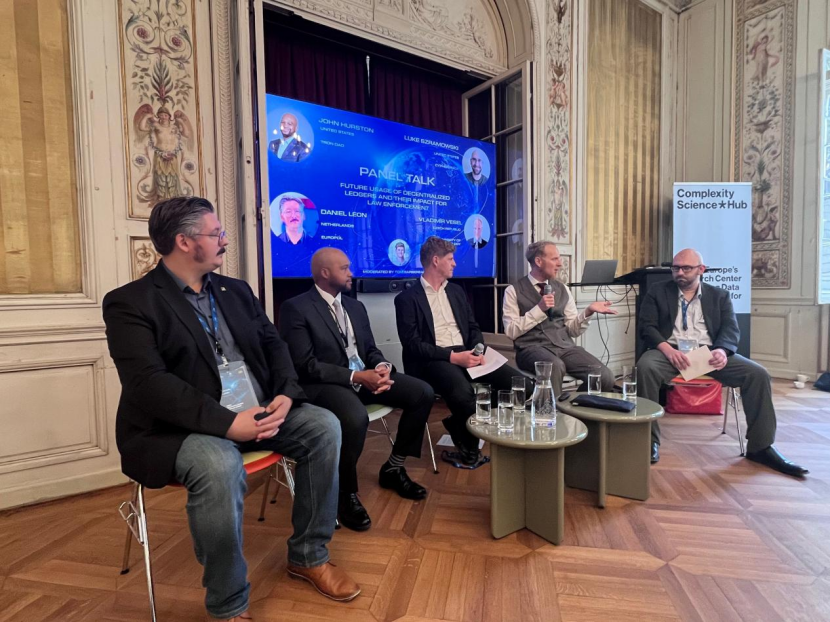
Hurston noted that as institutional capital continues to flow into the public chain ecosystem, security and compliance capabilities must be enhanced in tandem. He also introduced TRON's progress in deploying an end-to-end post-quantum signature scheme on the Nile testnet, conducting advance technical preparations to address potential cryptographic security risks posed by future quantum computing.
This participation in the INTERPOL forum is also a microcosm of TRON's ongoing engagement in global compliance and law enforcement discussions in recent years. As its stablecoin settlement scale continues to expand, TRON has gradually extended its compliance efforts from industry exchanges to specific areas including financial crime monitoring, cross-border law enforcement collaboration, and foundational security infrastructure.
From Brazil to Washington: Continuous Participation in Global Regulatory and Law Enforcement Exchanges
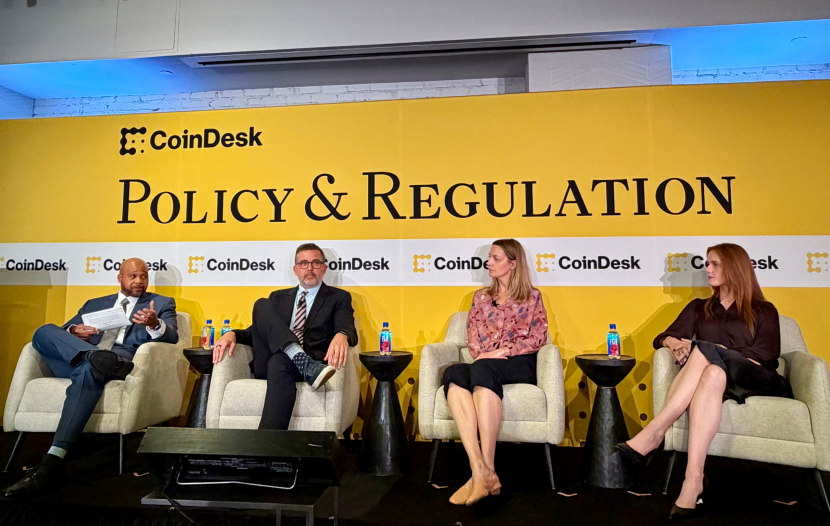
In fact, just one week before the Vienna forum, TRON had already appeared at the CoinDesk Policy & Regulation 2026 conference held on September 22 in Washington, D.C.
At the event, John Hurston moderated a panel discussion titled "The Future of Illicit Finance Monitoring on Public Blockchains," joined by Sarah Ward, Chief Legal and Administrative Officer of blockchain analytics firm Chainalysis, Molly Woodman, Senior Policy Advisor at the Digital Sovereignty Alliance (DSA), and David Feder, Partner at Fenwick law firm, to discuss topics including on-chain fund tracing, financial crime identification, and public-private information sharing.
Compared to policy-level exchanges, TRON's participation in Brazil in August of this year was closer to concrete law enforcement scenarios.
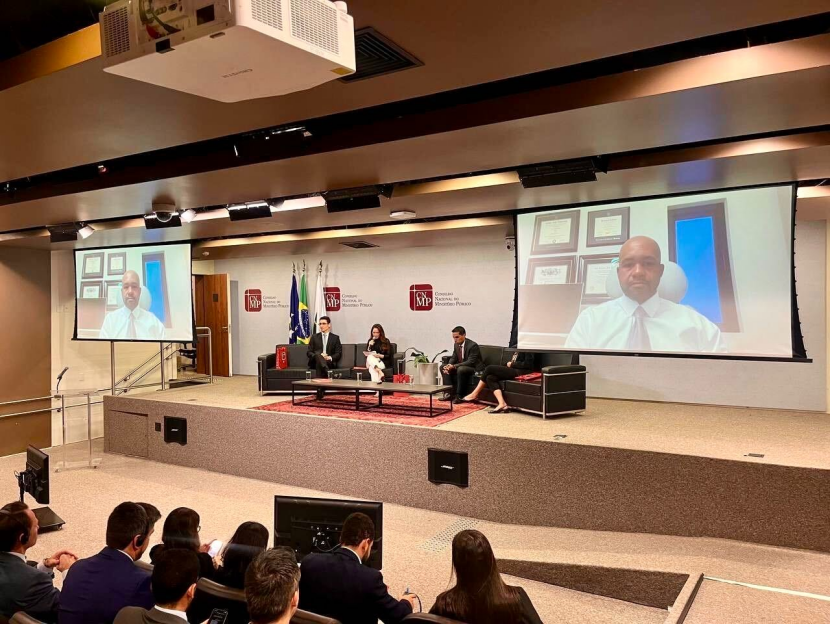
From August 26 to 27, TRON attended a digital asset tracing and recovery training forum jointly organized by the Digital Currency Governance Group (DCGG) and the Brazilian National Council of the Public Prosecution Service (CNMP) in Brasília. The event brought together over 100 representatives from Brazil's Central Bank, Federal Revenue Service, prosecution services, and judicial institutions, focusing on the processes for tracing, freezing, seizing, custody, and returning digital assets.
Sam Elfarra, Community Spokesperson for TRON, introduced the operational mechanisms of public blockchains and the traceability of on-chain transactions, while John Hurston participated in a panel discussion on asset recovery alongside Tether investigators and Brazilian prosecutors, exchanging views on how law enforcement agencies and blockchain companies can coordinate their actions. This also marked TRON's first direct engagement with Brazil's CNMP.
From policy discussions in Washington, to law enforcement training in Brazil, and to the INTERPOL forum in Vienna, TRON is facilitating a deeper understanding of public chain transaction mechanisms among regulators and law enforcement personnel through dialogues at different levels, while also bringing practical investigative needs into blockchain security development.
T3 Financial Crime Unit Becomes a Key Case Study in TRON's Compliance Practice
Beyond these exchanges, TRON already has a concrete cross-border financial crime enforcement cooperation mechanism in place.
In September 2024, TRON partnered with stablecoin issuer Tether and blockchain analytics firm TRM Labs to establish the T3 Financial Crime Unit (T3 FCU), focused on identifying and combating illicit financial activities involving USDT on the TRON network.
This mechanism established a relatively clear division of collaboration: TRM Labs provides on-chain analysis and fund flow tracing capabilities, TRON provides network infrastructure and related technical support, and Tether can freeze relevant USDT addresses through its stablecoin issuer authority upon legitimate law enforcement requests.
The key to this model lies in shortening the time between law enforcement agencies detecting suspicious funds and taking restrictive measures. According to data published in May 2026, T3 FCU has assisted global law enforcement agencies in freezing over $450 million in assets linked to illicit activities, with cooperation spanning 23 jurisdictions across five continents. In multiple emergency cases involving account theft and kidnapping for ransom, relevant assets can be frozen within 24 hours of a law enforcement request being filed.
In specific cases, T3 FCU assisted Brazil's Federal Police in the 2025 "Operation Lusocoin" anti-money laundering investigation. The operation involved asset preservation measures for over 3 billion Brazilian reais, with investigators freezing relevant bank accounts and cryptocurrency wallets, and seizing vehicles, real estate, and other assets. Among these, approximately 4.33 million USDT linked to the criminal network were frozen.
In August 2025, T3 FCU further launched the global collaboration program T3+, with Binance becoming the first official member. In their first joint operation, the two parties helped freeze nearly $6 million in assets related to "pig butchering" scams, extending the scope of collaboration to trading platforms.
This mechanism has also drawn attention from international anti-money laundering organizations. The Financial Action Task Force (FATF), in its 2025 publication "Asset Recovery Guidelines and Best Practices," cited T3 FCU as a case study of public-private cooperation in the digital asset sector. For the blockchain industry, the practical value of such cooperation lies in connecting on-chain monitoring, law enforcement investigations, and asset disposal into an executable process.
From Compliance Collaboration to Security Infrastructure: TRON Enhances Institutional-Grade Service Capabilities
Another foundation of compliance development is the ability of underlying technology to meet increasingly complex security requirements.
In September of this year, smart contract security company OpenZeppelin announced the introduction of its audited smart contract libraries, security upgrade tools, and Contracts Wizard to TRON. Its public audit report showed that all 11 issues identified in TRON-related contract libraries and settlement contracts have been remediated, providing developers with more standardized contract development and upgrade tools. Combined with the disclosed deployment of post-quantum signatures on the Nile testnet, TRON is enhancing its technical preparations in two directions: existing contract security and future cryptographic risks.
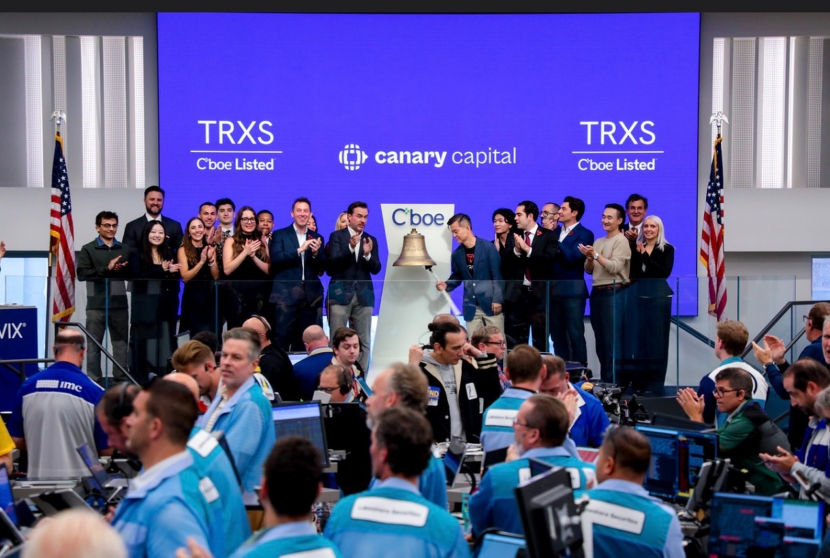
At the same time, TRON's institutional access channels are also expanding. The listing of the Canary Staked TRX ETF, Anchorage Digital's expanded custody support, and Bitnomial's launch of TRX spot and futures products are enabling traditional financial institutions to access TRX-related assets through more existing financial service channels.
Data shows that TRON's cumulative total transfer volume has exceeded $30 trillion, on-chain USDT circulation exceeds $94 billion, and total accounts exceed 408 million. Such a massive scale of fund activity also means that on-chain risk monitoring, cross-border investigative collaboration, and security technology upgrades must continuously keep pace.
From participating in the INTERPOL New Technology Forum to advancing the operation of the T3 Financial Crime Unit, TRON is forming a relatively clear compliance development path: enhancing mutual understanding between regulatory and technical domains through international exchanges, improving the efficiency of illicit fund identification and disposal through cross-industry collaboration, and providing support for broader financial applications through security tools and infrastructure upgrades.
For a public chain that is gradually assuming global stablecoin payment and settlement functions, transaction scale is only one metric for measuring network development. Whether it can continuously improve risk response capabilities, support legitimate law enforcement investigations, and adapt to regulatory requirements across different markets while maintaining openness and efficiency will become an important test for its future participation in global financial infrastructure development.