

搜索
全部
文章
快讯
专题
活动
专栏作者
文章




查看更多
快讯
Kalshi promotes "micro-insurance" to small businesses, with about 500 businesses using it to hedge risk
Odaily: Kalshi promotes "micro-insurance" to small businesses, with about 500 businesses using it to hedge risk. (Decrypt)
Ethereum Developers Classify Post-Quantum and AI Security Threats as DEFCON 2-3
Odaily: Ethereum developers have classified post-quantum and AI security threats as DEFCON 2-3. (Decrypt)
Polygon Labs Expands Open Money Stack to Base Network
Odaily reports: Blockchain infrastructure company Polygon Labs has deployed its Open Money Stack payment platform as a full-service offering on Coinbase's Layer 2 network Base, enabling enterprises to pay cross-border recipients in USDC or local currency.The platform integrates fiat on/off-ramps, embedded wallets, and settlement into a single integration. With the addition of Base, it now covers Polygon Chain, Ethereum, Solana, and Tron.DeFiLlama data shows that the stablecoin supply on Base is approaching $5 billion. With this integration, enterprises paying merchants holding USDC on Base can send funds directly to recipients' existing wallets through the same platform, and recipients who choose local currency can also receive payments in the same batch. (Decrypt)

Aave Labs Urges FCA to Clarify DeFi Regulatory Scope, CryptoUK Opposes Default Regulation of Developers
Odaily: The UK Financial Conduct Authority (FCA) plans to require decentralized finance (DeFi) platforms to obtain authorization under the new crypto regulatory regime, citing risks such as fraud, scams, money laundering, and users' difficulty in recovering stolen funds as reasons for taking a strict stance. The FCA also cited the $6.4 billion hack suffered by Binance as an example, noting that stolen funds were transferred through decentralized trading platforms. (Decrypt)
Braiins Warns: Over a Thousand Mining Farms Hit by Hashrate Hijacking, Connections Redirected
Odaily: Mining software company Braiins stated that on November 20, attackers redirected the connections of over a thousand mining farms to impersonating mining pools within one second. The attackers exploited the unencrypted Stratum V1 protocol and BGP route manipulation to impersonate mining pools, providing normal tasks to mining machines and crediting the shares submitted by miners to their accounts on another mining pool, without compromising the mining machines or Braiins Pool.Braiins said the incidents had appeared in Latin America since early November, mainly involving Brazil and Argentina; a larger wave on November 20 primarily affected European miners, with each redirection involving approximately 0.6 to 1.9 EH/s of hashrate, and the redirected hashrate grew more than tenfold within two weeks. The company recommends that miners use Stratum V2 or enable TLS connections with certificate verification, and remove plaintext backup connections; it also released a free proxy tool for miners who are temporarily unable to upgrade. (Decrypt)
Transak Secures MiCA Authorization from Austria's FMA, to Offer Native On/Off-Ramp Services Across 30 European Countries Starting November 26
Odaily reports: Payment infrastructure company Transak has announced that its Vienna entity, Transak GmbH, has been authorized by the Austrian Financial Market Authority (FMA) under the EU's Markets in Crypto-Assets Regulation (MiCA). Starting November 26, applications integrated with Transak can provide regulated crypto asset buying and selling services to users across 30 countries in the European Economic Area through a single integration.This authorization enables users to purchase stablecoins and other crypto assets using fiat currencies such as the euro, and to sell and withdraw them to bank accounts. The services will support bank cards, Apple Pay, Google Pay, and SEPA. Transak currently serves over 600 applications and more than 10 million users. (Decrypt)
Coldcard firmware weak randomness vulnerability persisted for five years, undetected across at least 15 security reviews
Odaily reports: Hardware wallet manufacturer Coinkite has disclosed that Coldcard firmware used MicroPython's Yasmarang software pseudo-random number generator to generate wallet seeds between March 2021 and July 2026, rather than the intended hardware random number generator. The effective randomness of the affected seeds was approximately 40 to 72 bits, below the 128-bit target, allowing attackers to reconstruct private keys offline and steal funds.The vulnerability evaded at least 15 independent security reviews, including two paid third-party audits, physical security work conducted by Ledger Donjon, and one AI-assisted firmware review. Coinkite stated that the checks confirmed the hardware random number code was present but failed to verify that the seed generation process actually called that code; the protection mechanism in the underlying libNgU originally intended to reject misconfigurations also failed to take effect.Coinkite said the first theft occurred two days after the full-weight release of Kimi K3, and that the AI-assisted discovery was merely a "reasonable hypothesis." After the vulnerability was made public, Bitcoin Red Team used Kimi K3 to conduct a 108-hour multi-model scan, flagging nearly 8,000 candidate findings across 501 Bitcoin projects; Coinkite has rebuilt the seed generation mechanism, but seeds previously generated by affected devices cannot be fixed through updates, and users need to migrate to new seeds. (Decrypt)
Ethlabs withdraws Hegotá proposal to free up engineering resources for Ethereum security upgrade
Odaily reports that Ethlabs has withdrawn the Hegotá proposal to free up engineering resources for the Ethereum security upgrade. (Decrypt)
South Korea's Financial Services Commission Plans to Extend Market Manipulation Rules to Crypto-to-Crypto Trading
Odaily: The draft of the "Digital Asset Industry Innovation and User Protection Act" published by South Korea's Financial Services Commission plans to extend market manipulation rules to crypto-to-crypto trading. The draft still awaits approval from the South Korean National Assembly, and the relevant rules have not yet taken effect. (Decrypt)
Bullpen Confirms Security Incident Involving 18 to 19 Early Test Accounts, Takes Affected Services Offline
Odaily reports: Crypto trading platform Bullpen has confirmed a security incident involving 18 to 19 accounts opened during an early testing period between April and June 2024, including the account of Ansem. Bullpen has taken the affected test services offline, stating that the accounts in question represent less than 0.005% of total registered users.On-chain investigations show that the total amount of transferred funds was $2.57 million, of which approximately $2.1 million came from meme coin sales. Bullpen stated that it will contact affected users directly and provide progress updates every three hours during the investigation. (Decrypt)
查看更多
活动
进行中
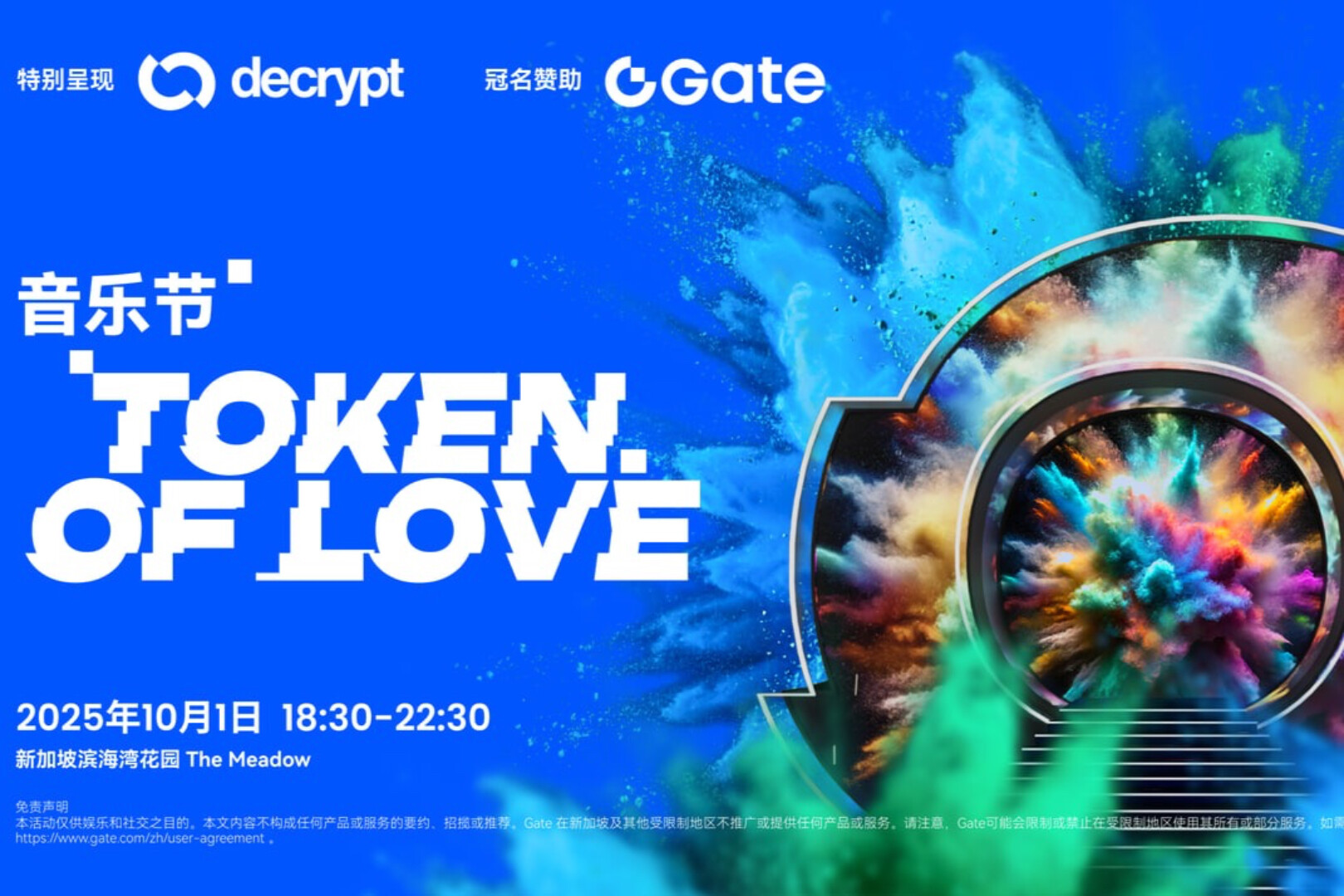
Token of Love Music Festival, sponsored by Gate and presented by Decrypt, will be held in Singapore on October 1, 2025
 Decrypt
 The Meadow – Gardens by the Bay, Singapore
2025
09/30


